Marriage does not end with the wedding-day vows — many traditions in Hindu culture come after marriage, meant to welcome the bride into her new home, bless the couple, and help families bond. Below are some of the post-marriage Hindu Rasams you should know and cherish.
Vidaai – The Emotional Farewell
After the wedding, the ritual of Vidaai marks the bride’s final goodbye to her parental home. The bride throws handfuls of puffed rice in four directions. This act symbolizes her gratitude to her parents and hopes for wealth and prosperity in her childhood home. As she leaves, her family bids her farewell with tears and hugs.
Griha Pravesh – Welcoming the Bride at Her New Home
When the couple reaches the groom’s house, the ritual of Griha Pravesh welcomes the bride into her new home. The mother-in-law often places a pot filled with rice at the doorstep and the bride gently steps in — sometimes after dipping her foot in vermillion (kumkum) water. This act symbolizes that the bride brings prosperity, good luck, and blessings into her new home.
Mooh Dikhai – Bride’s Formal Introduction to New Family
Soon after Griha Pravesh, comes Mooh Dikhai — the ritual where the bride’s face is unveiled before her in-laws and extended family, and she receives blessings and gifts. It’s a warm, emotional moment of acceptance and love, marking the beginning of her journey as a new member of the family.
Fun and Bonding: Game of the Rings & Entry Rituals
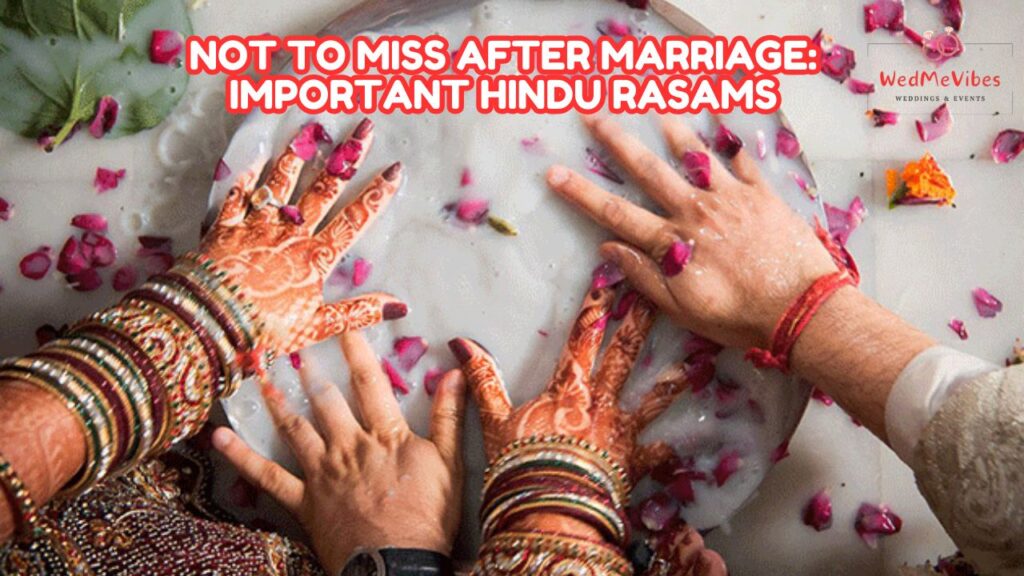
To ease the bride into the family and bring light-hearted joy, families often perform playful rituals like Game of the Rings (also called “Angoothi Khoj”) — the couple searches for a ring hidden among milk, petals, and turmeric. Whoever finds the ring more often is playfully called the “ruler of the house.” This is a fun way to break the ice and start the married life with laughter.
Another fun ritual after arrival is Darwaza Rokaai — the bride’s entry is momentarily blocked by the groom’s sisters, who demand fun gifts before letting her in. It’s a playful way for the new family to bond, adding laughter to the solemn occasion.
Pag Phera – Bride’s Visit to Her Parental Home
A few days after the wedding, the bride visits her parental home — a ritual known as Pag Phera. She returns to spend some time with her family. The groom visits her there and seeks blessings from her parents before bringing her back to his home. Pag Phera is a symbol of continuing love and bonding with her family even after marriage.
Reception – Celebrating the New Beginning
Often, families throw a celebration — a Reception Ceremony — soon after the wedding. It formally introduces the newlyweds to extended family, friends, and society as husband and wife. It blends tradition and joy, offering an opportunity for everyone to bless and celebrate the couple’s new life together.
Why These Rasams Matter
- They help the bride feel welcomed and accepted in her new home.
- They allow families to bond — both the bride’s family and groom’s family.
- They bring blessings, joy, and a sense of belonging to the bride and groom’s new life.
- They add emotion, fun, and deep meaning to the days after marriage.
Final Thought
Post-marriage Hindu rasams are not just traditions, they are moments that bring two families together and help the bride and groom start their new life with love and blessings. These simple and meaningful rituals create warm memories, build strong family bonds, and add smoothness to the couple’s journey ahead. Even in modern times, these rasams remind us that marriage is more than a ceremony — it is the beginning of a lifelong connection filled with respect, joy, and togetherness.