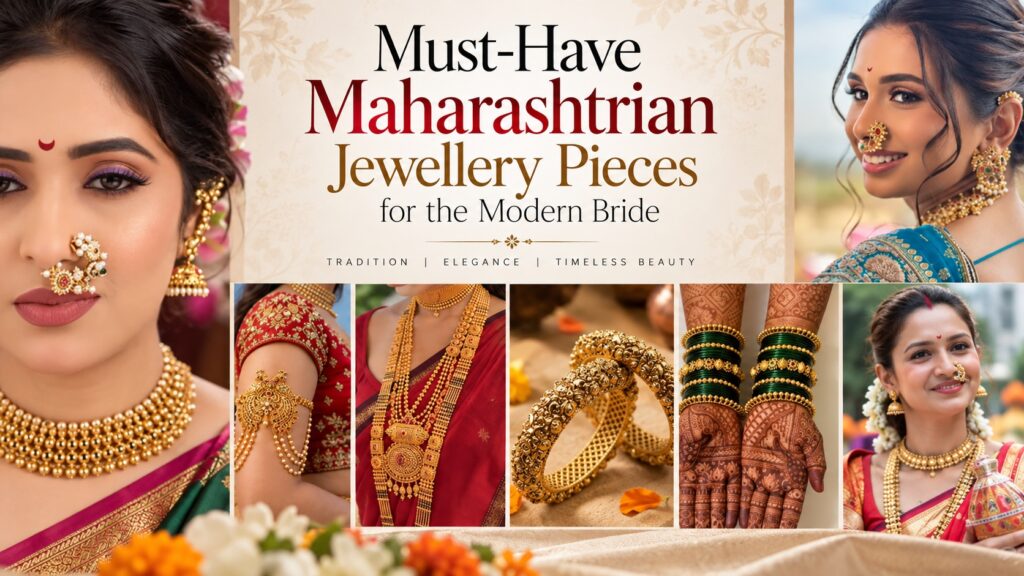
Nobody tells you that Maharashtrian bridal jewellery is about much more than simply adding accessories to your wedding look. It is a beautiful reflection of family traditions, culture, and generations of heritage, worn proudly around your neck, arms, and even your nose. And when the styling is not done right, it can affect the entire bridal look.
We’ve seen brides invest heavily in a beautiful Paithani saree, only to pair it with mismatched traditional jewellery because no one explained which pieces should be worn together or what each one represents. And honestly, that feels like a missed opportunity.
Maharashtrian bridal jewellery is not a random collection of ornaments. Every piece has its own significance, traditional place, and story. From the iconic Nath to the classic Thushi and traditional green bangles, these ornaments have been part of Maharashtrian bridal traditions for generations.
So, instead of treating bridal jewellery as just another part of your wedding outfit, let’s understand it properly—piece by piece, tradition by tradition.
Thushi – The Choker That Completes the Look
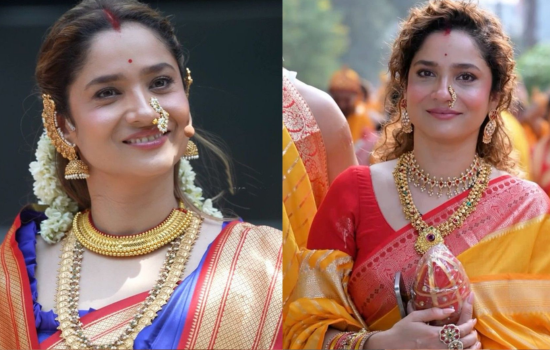
Let’s start with the Thushi, one of the most recognizable pieces of Maharashtrian bridal jewellery. This traditional gold choker is made with closely arranged gold beads that sit beautifully around the base of the neck. Its design is simple yet eye-catching, especially when it catches the light as you move.
The Thushi works particularly well with traditional sarees such as a Paithani. It also looks beautiful in bridal portraits and close-up photographs. If your neckline feels like it is missing something, adding a Thushi can instantly make the entire bridal look feel more complete.
Nath – A Small Piece with a Big Impact
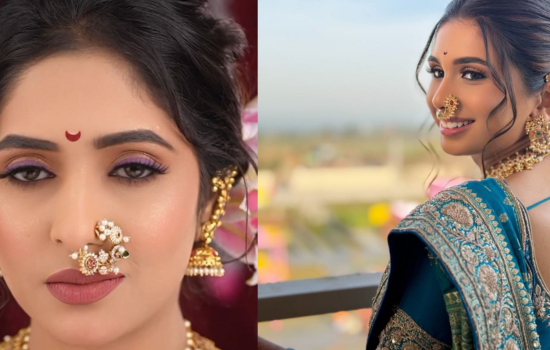
The Nath is one of the first pieces people notice in a Maharashtrian bridal look. Traditionally designed with pearls, gemstones, and colourful detailing, this curved nose ring beautifully frames the face.
More than just an ornament, the Nath adds character and instantly gives the bride a traditional Maharashtrian appearance. It pairs especially well with a Nauvari saree or Paithani saree, creating a classic look that reflects the region’s rich bridal traditions.
Patlya – The Classic Gold Bangles
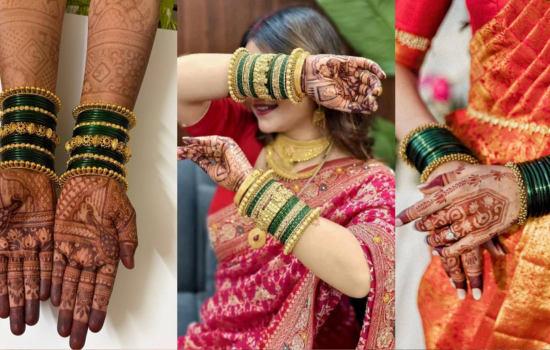
Patlya are broad, traditional gold bangles that form an important part of Maharashtrian bridal jewellery. Their design is generally elegant and understated, making them ideal for creating the foundation of a layered bangle look.
Think of Patlya as the base of your bridal bangles. Additional bangles can be worn alongside them to create a fuller and more traditional appearance without making the overall look feel unbalanced.
Tode – The Bold Bridal Statement
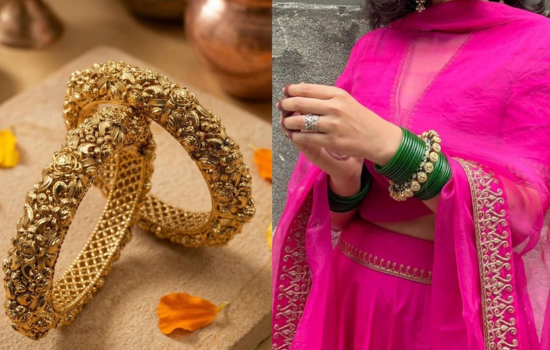
If Patlya provide a subtle foundation, Tode bring a much stronger presence. These thick gold bangles are traditionally known for their detailed craftsmanship and substantial appearance.
Tode can instantly draw attention to the bride’s hands and add a sense of richness to the overall outfit. They are especially striking when paired with other traditional gold bangles. For brides who want their jewellery to make a statement, Tode are a beautiful choice.
Rani Haar – Add a Touch of Grandeur
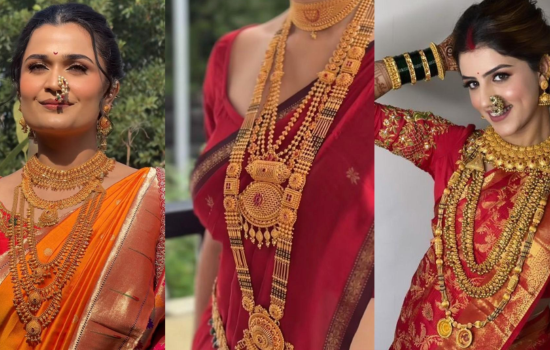
The Rani Haar is the perfect choice when you want to add drama and elegance to your bridal jewellery. This long necklace falls lower on the chest and creates a beautiful layered effect when worn with shorter necklaces such as the Thushi.
Pairing a Rani Haar with traditional jewellery like a Kolhapuri Saaj can create a rich and regal bridal appearance. It also works beautifully with heavily detailed Paithani sarees, especially when the goal is to create a grand wedding-day look.
Bajubandh – The Detail That Shouldn’t Be Missed
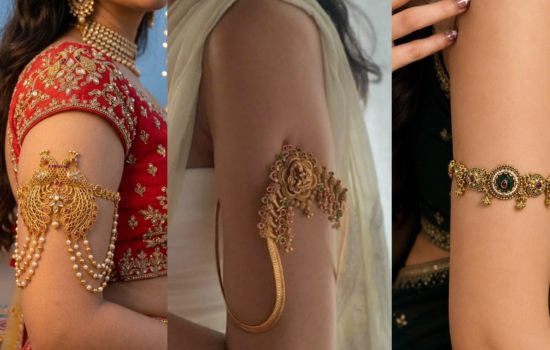
The Bajubandh, or traditional armlet, is worn around the upper arm and is one of those jewellery pieces that can easily be overlooked. However, it can make a noticeable difference to the finished bridal look.
A beautifully designed Bajubandh adds detail to the arms and helps balance the jewellery worn around the neck and wrists. It is particularly effective with sleeveless or traditionally styled blouses where the upper arm is visible.
Conclusion – Let Your Jewellery Tell the Story
Maharashtrian bridal jewellery is much more than a collection of beautiful gold ornaments. Each piece brings its own character to the bridal look while reflecting traditions that have been passed down through generations.
From the elegant Thushi and eye-catching Nath to the classic Patlya, bold Tode, grand Rani Haar, and delicate Bajubandh, these pieces can come together to create a bridal style that feels traditional, graceful, and deeply connected to Maharashtrian culture.
The key is not simply to wear as much jewellery as possible. Choose pieces that complement your saree, blouse, hairstyle, and overall bridal styling. When everything works together, your jewellery does more than complete your outfit—it becomes part of your wedding story and a beautiful reminder of the traditions you carry forward.