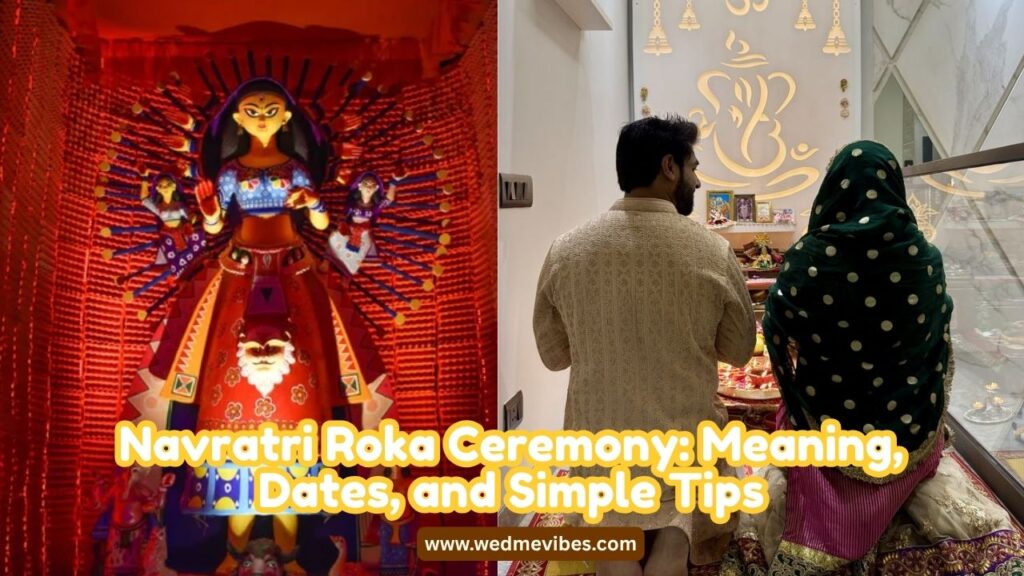
Roka is the first big step in an Indian wedding. It means the couple and families say “yes” to each other. The word “Roka” comes from “to stop” – it shows the search for a life partner is over. Both sides meet, do a small puja, share sweets, and give blessings. It is usually a small get-together with close family only. No big party, just warm feelings and happiness.
What is Navratri Roka?
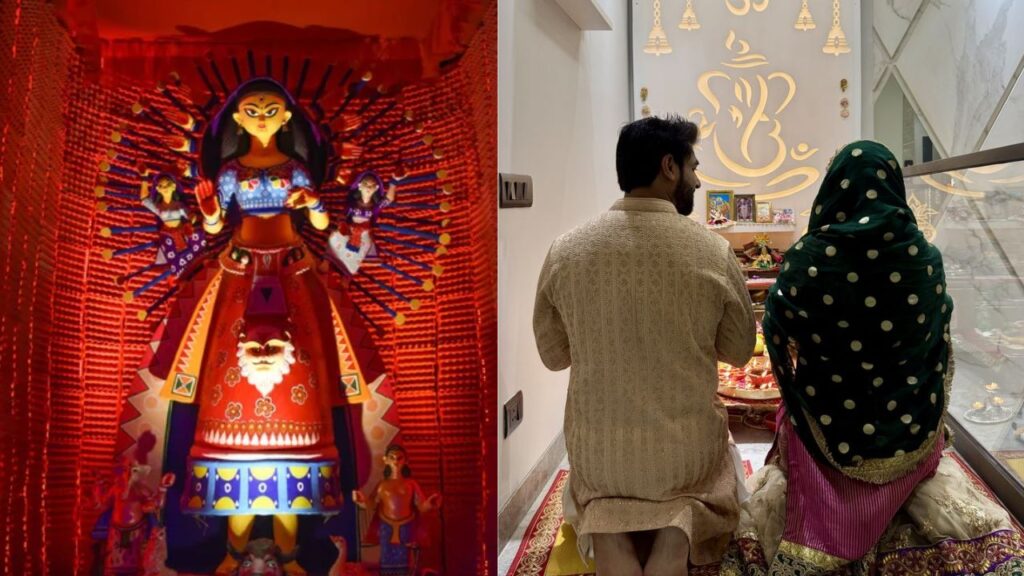
Many couples now pick Navratri time for their Roka. Navratri is a nine-day festival for Goddess Durga. It celebrates good winning over bad and new starts. The home feels special during Navratri with prayers, fasting, diyas, and positive energy. Doing Roka in this time feels extra blessed. Families feel more joyful and open because of the festive mood. It makes the first family meeting more meaningful and full of good vibes.
Why choose Navratri for Roka?
- Navratri brings new beginnings and divine blessings.
- The festival energy makes everything feel sacred and positive.
- Homes have diyas, rangoli, and devotion – perfect for starting a new life together.
- Everyone is in a happy, celebrating mood, so families bond easily.
Auspicious Dates for Navratri Roka
Navratri happens two main times in a year: Chaitra Navratri (March-April) and Sharad Navratri (September-October).
All nine days of Navratri are good for Roka because the whole period is auspicious. But some days feel extra special:
For 2026 examples:
- Chaitra Navratri 2026 (around March-April): Days like Day 1 (new start), Day 4-6 (for stability), and Day 8 (Ashtami) are very liked.
- Sharad Navratri 2026 (around October): Days like Day 2-3 (good for family bonding), Day 5-7 (for commitments), and Day 9 (Navami) are strong choices.
Best times in the day: Morning (6-10 AM) is often the top choice. Afternoon or evening also works. Avoid Rahu Kaal (ask a pandit for your city timings). Always check with a family pandit for the perfect muhurat in your year and place.
Tips for a Navratri Roka
Keep it easy and at home. Here are some tips:
- Place: Do it at home or a family member’s house. Small and personal is best.
- Decor: Use marigold flowers, rose garlands, earthen diyas, and simple rangoli at the door. Pick festive colors like saffron, red, gold, or yellow. Make a small puja corner.
- Outfits: Bride can wear a light saree or lehenga in red, yellow, orange, or green. Groom can wear a nice kurta. Keep it festive but comfortable.
- Food: Share traditional sweets like motichoor laddoo or kaju katli. Add dry fruits as gifts. If someone is fasting for Navratri, keep food simple and fasting-friendly.
- Rituals: Do a small aarti, exchange sweets, and take blessings from elders. Click some phone photos of candid moments – they become sweet memories.
- After Roka: Start planning the next steps like engagement, venue, and vendors. Book early because good places fill fast.
A Navratri Roka feels special because it mixes love, family, and festival joy. It gives your wedding journey a blessed and happy start.
Conclusion
A Navratri Roka is more than just the first step of your wedding – it is a beautiful way to start your journey together with love, family blessings, and the divine energy of Goddess Durga. The festive lights, prayers, and happy mood make every moment feel extra special and full of good luck. Whether you choose Chaitra Navratri right now in March 2026 or wait for Sharad Navratri later this year, this timing brings peace, joy, and positive vibes to your new beginning.
If you are planning your Roka during Navratri, keep it simple, heartfelt, and full of family warmth – that’s what makes it truly memorable.
Ready to plan your dream Roka or full wedding? Drop your questions or ideas in the comments below. We are here to help at WedMeVibes!